Is Mold Remediation Worth the Cost or Can You DIY It?

A Decision That Has Real Consequences Either Way
Mold is one of those household problems that tempts people to handle it themselves. Bleach is cheap, tutorial videos are everywhere, and calling a professional remediation company sounds expensive. Before you reach under the sink for cleaning supplies, though, it's worth understanding what mold actually is, how it behaves, and what happens when cleanup is done incompletely. The answer to whether professional remediation is worth the cost usually comes down to scope — and the scope is almost always bigger than it looks.
What Professional Mold Remediation Actually Involves
Professional remediation is not simply scrubbing visible mold off a surface. It is a structured process designed to eliminate mold at its source, prevent spore dispersal to unaffected areas, and verify that the environment is safe before the job is considered complete. In homes across Athens, GA, where warm temperatures and high humidity accelerate mold growth, cutting corners at any stage almost always leads to regrowth.
A properly executed professional remediation follows six sequential steps:
- Inspection and moisture mapping. Technicians use moisture meters and sometimes thermal imaging to locate all affected areas — including growth hidden behind walls, under flooring, and inside HVAC systems that isn't visible to the naked eye.
- Containment. Plastic sheeting and negative air pressure isolate the work area, preventing mold spores disturbed during cleanup from traveling to unaffected parts of the home.
- HEPA air filtration. Commercial air scrubbers with HEPA filters run continuously throughout the job, capturing airborne spores and maintaining safe air quality inside the containment zone.
- Material removal. Porous materials like drywall, insulation, and carpet that cannot be effectively cleaned are physically removed and disposed of according to safety protocols.
- Antimicrobial surface treatment. All remaining structural surfaces in the affected area are treated to kill residual mold and inhibit future growth.
- Post-remediation testing. An independent air quality test confirms that spore counts have returned to acceptable levels before containment is removed and the area is cleared.
The Narrow Cases Where DIY Mold Cleanup Is Reasonable
There are situations where a homeowner in Athens, Georgia can address mold without professional help — but those situations are more limited than most people assume. DIY cleanup is only appropriate when all of the following conditions are true at the same time:
- The mold covers less than 10 square feet — roughly the size of a 3x3 foot patch
- The mold is growing on a hard, non-porous surface such as tile, sealed concrete, or painted metal
- The moisture source has already been fully repaired and the area is confirmed dry
- No household member has asthma, allergies, respiratory conditions, or a compromised immune system
- The mold is not black mold (Stachybotrys chartarum) or any other potentially toxic species
Even in these cases, proper protective equipment — gloves, an N95 respirator, and goggles — is not optional. And bleach, while effective on hard non-porous surfaces, will not penetrate porous materials. Applying it to drywall kills surface growth while leaving the root structure intact — one of the most common and costly DIY mistakes.
Where DIY Mold Cleanup Consistently Falls Short
The vast majority of mold situations that homeowners encounter do not meet the conditions above. When they don't, DIY approaches don't just underperform — they can actively make things worse. These are the four areas where self-remediation fails most consistently:
Hidden Growth
Mold frequently develops inside wall cavities, under flooring, above ceiling tiles, and inside HVAC ductwork — far beyond what's visible on the surface. Cleaning only what you can see leaves the actual colony untouched. Without moisture mapping tools, there is no reliable way for a homeowner to know how far the growth has spread.
Porous Materials
Drywall, wood framing, insulation, and carpet cannot be effectively cleaned — they must be removed. The fungal root structures (hyphae) penetrate deep into these materials. Surface treatment leaves the colony intact and gives it time to re-establish itself once the cleaning agent dissipates.
Spore Dispersal
Cleaning mold without professional containment releases thousands of spores into the air. Those spores travel through the home via air currents and the HVAC system, settling in new areas where they can colonize under the right conditions. A single room problem can become a whole-home problem in hours.
Moisture Source Identification
Mold cannot be permanently eliminated without eliminating the moisture that feeds it. Many homeowners clean visible mold without identifying — or fully resolving — the underlying leak, condensation issue, or drainage problem. Regrowth typically appears within weeks.
The Real Cost of Getting Mold Remediation Wrong
Homeowners in Athens, GA who attempt DIY remediation on a significant mold problem frequently end up calling a professional anyway — after the situation has worsened. By that point, the scope of work is larger than it would have been, and so is the bill. The downstream costs of a failed DIY attempt include:
- Contamination spreading to previously unaffected areas, increasing the total remediation scope and cost
- Health consequences from extended mold exposure — respiratory irritation, allergic reactions, and headaches — that are especially serious for children, the elderly, and immunocompromised individuals
- Structural damage from moisture and mold persisting inside wall cavities and floor systems over time
- Disclosure complications when selling the home — improper prior treatment can raise flags during inspection and complicate a real estate transaction
- Higher professional remediation costs because the crew must now address a larger affected area than originally existed
Frequently Asked Questions
Does professional mold remediation include post-clearance testing?
It should. Reputable companies arrange for independent air quality testing after the job to confirm spore counts have returned to normal before containment is removed. Always ask whether this testing is included in the quote.
Can mold return after professional remediation?
Yes — if the moisture source isn't fully resolved. Professional remediation eliminates existing mold, but new growth can return if elevated humidity, leaks, or condensation problems persist. Permanent resolution requires addressing the root cause of the moisture.
Is black mold as dangerous as people say?
Stachybotrys chartarum produces mycotoxins that can cause significant health effects with prolonged exposure. That said, color alone does not identify mold species — only laboratory testing can. Any substantial mold growth, regardless of color, should be treated as a potential health risk.
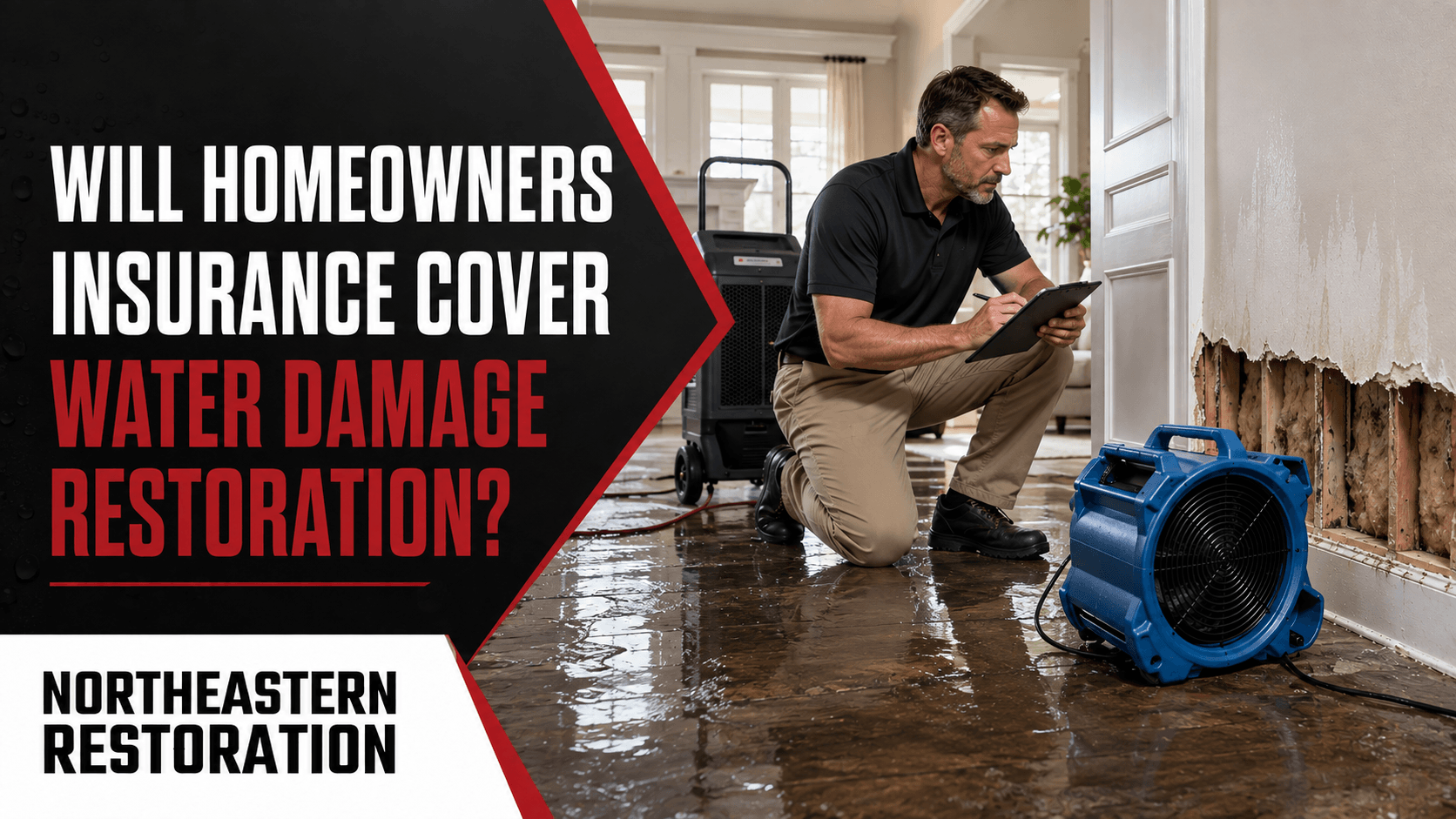
Will homeowners insurance cover mold remediation?
Coverage depends on the cause. If mold resulted directly from a covered water damage event, remediation is often covered. If it's attributed to long-term neglect or a pre-existing condition, most insurers will deny the claim.
How long does professional mold remediation take?
Small, contained jobs can be completed in one to two days. Larger infestations involving multiple areas or hidden mold inside walls can take several days to a week or more, depending on scope and drying requirements.
Making the Right Call for Your Home and Your Family
The question isn't really DIY versus professional — it's whether the situation you're dealing with falls within the narrow conditions where self-remediation is safe and effective. A small surface patch on bathroom tile might. Anything larger, anything involving porous materials, anything with hidden growth — doesn't.
Northeastern Restoration provides expert mold remediation services throughout Athens, Georgia and surrounding counties. Our IICRC-certified technicians locate all affected areas, contain and eliminate growth properly, and verify clearance with independent testing. Call us at
(678) 235-9436 for a free mold inspection.