What Does the Water Damage Restoration Process Look Like?
Knowing What to Expect Changes Everything
When water damages your home, one of the most disorienting parts of the experience is not knowing what comes next. A crew arrives, equipment gets carried in, and suddenly your home is filled with the noise of fans and dehumidifiers running around the clock. It can feel chaotic when you don't understand what's happening and why. The truth is that professional water damage restoration follows a structured, methodical sequence — and knowing what each step involves helps you stay informed, ask the right questions, and recognize whether the work is being done correctly. Here is exactly what the process looks like from the moment you make that first call.
Step 1: Emergency Contact and Initial Assessment
The process begins the moment you call. Reputable restoration companies serving Athens, GA offer 24/7 emergency response and can typically be on-site within 60 minutes. The initial visit is about understanding the full scope of the problem — not just what's visible — before any work is authorized.
During the assessment, the restoration team works through a systematic evaluation:
- Source identification. The team confirms the water source has been shut off or contained and categorizes the water — clean, gray, or black — to establish the appropriate safety protocols for the job.
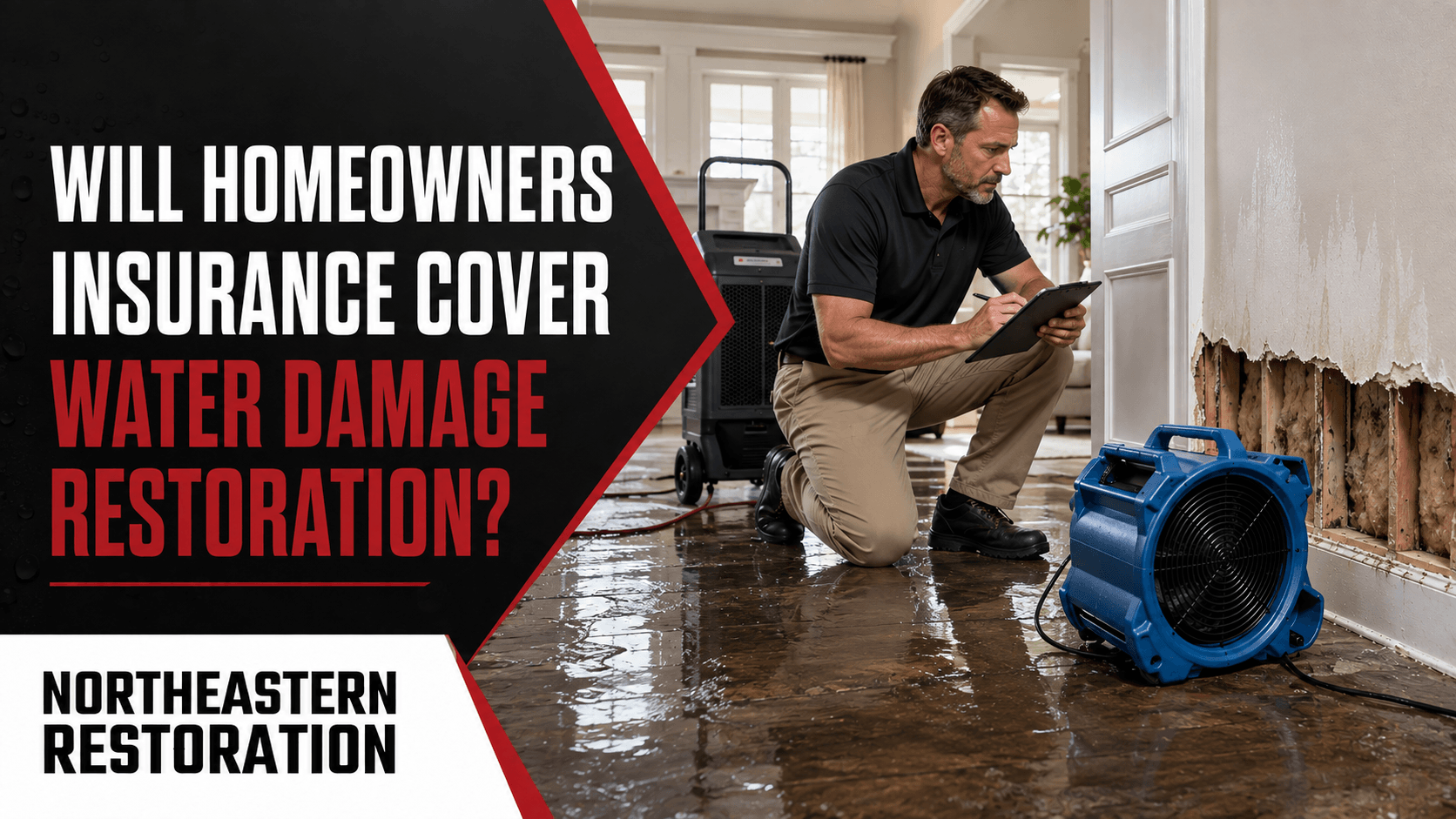
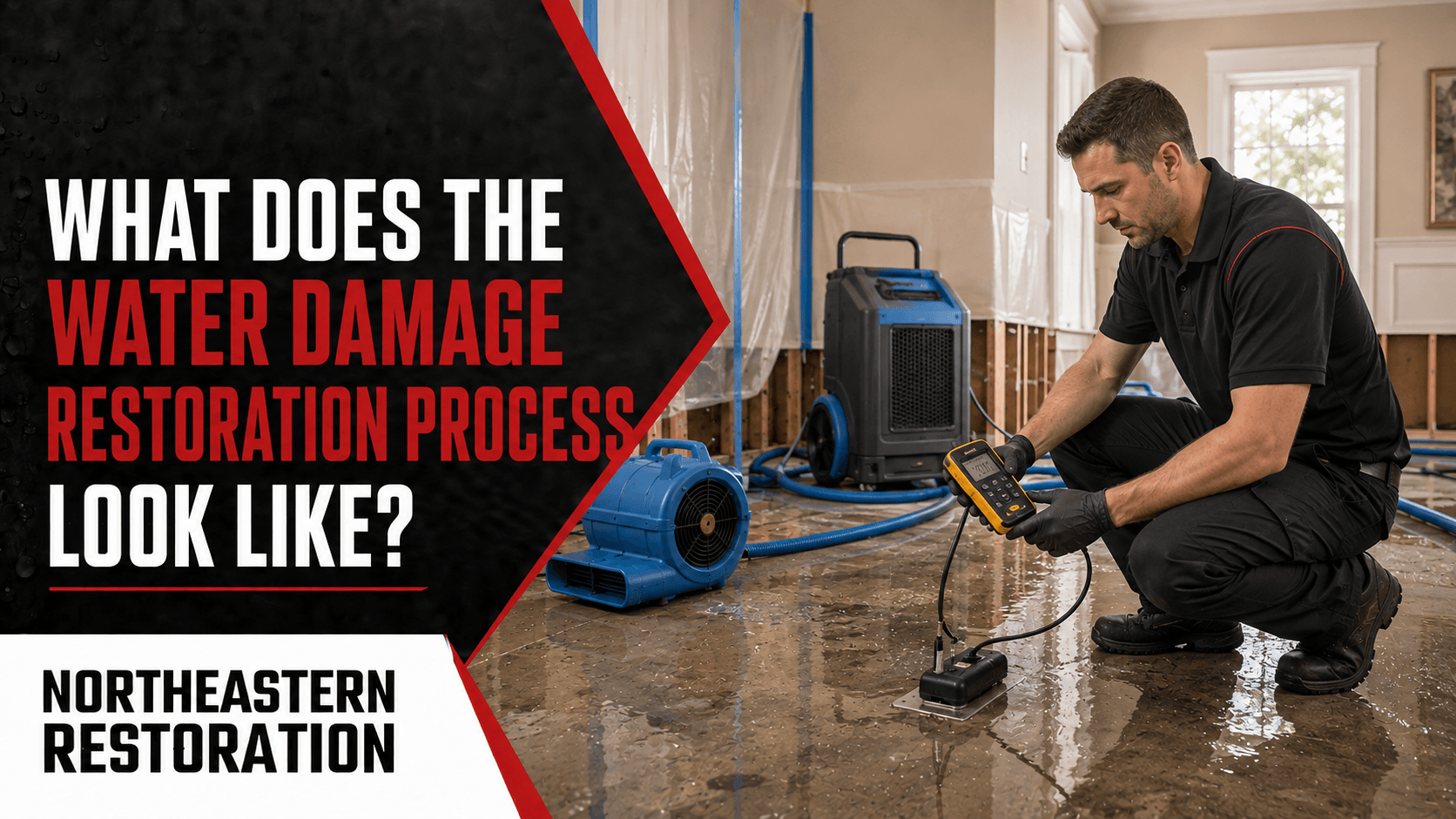
- Moisture mapping. Using moisture meters and thermal imaging cameras, technicians trace exactly where water has traveled, including areas not visible to the naked eye — behind walls, under flooring, inside ceiling cavities.
- Material evaluation. Each affected material is assessed to determine whether it can be dried in place or must be removed. This distinction directly shapes the scope and cost of the job.
- Documentation. All damage is photographed and recorded in detail for insurance purposes before any work begins.
- Scope explanation and authorization. The team walks you through what needs to happen and obtains your written approval before any services start.
Step 2: Water Extraction
Once the assessment is complete, extraction begins immediately. Speed matters more here than at any other point in the process — every hour water sits, it penetrates deeper into materials and raises the risk of mold. In Athens, Georgia, where warm and humid conditions accelerate absorption, fast extraction can be the single most consequential decision in determining the final scope of the job.
The extraction phase uses truck-mounted or portable units capable of removing hundreds of gallons per hour. Technicians address standing water first, then move to saturated carpeting, carpet padding, and upholstered furniture. Specialty attachments reach water in subfloors and wall cavities. Materials like carpet padding that cannot be effectively dried in place are removed and disposed of during this phase. Moisture readings are recorded before and after extraction to establish a documented baseline.
Step 3: Drying and Dehumidification
After extraction, the affected area enters the drying phase — and this is where most homeowners underestimate what's required. Surface areas may feel dry within a day, but structural materials hold moisture far longer. Subfloors, wall cavities, and wood framing can remain dangerously wet for days after the visible water is gone.
The drying phase uses three types of equipment working in combination:
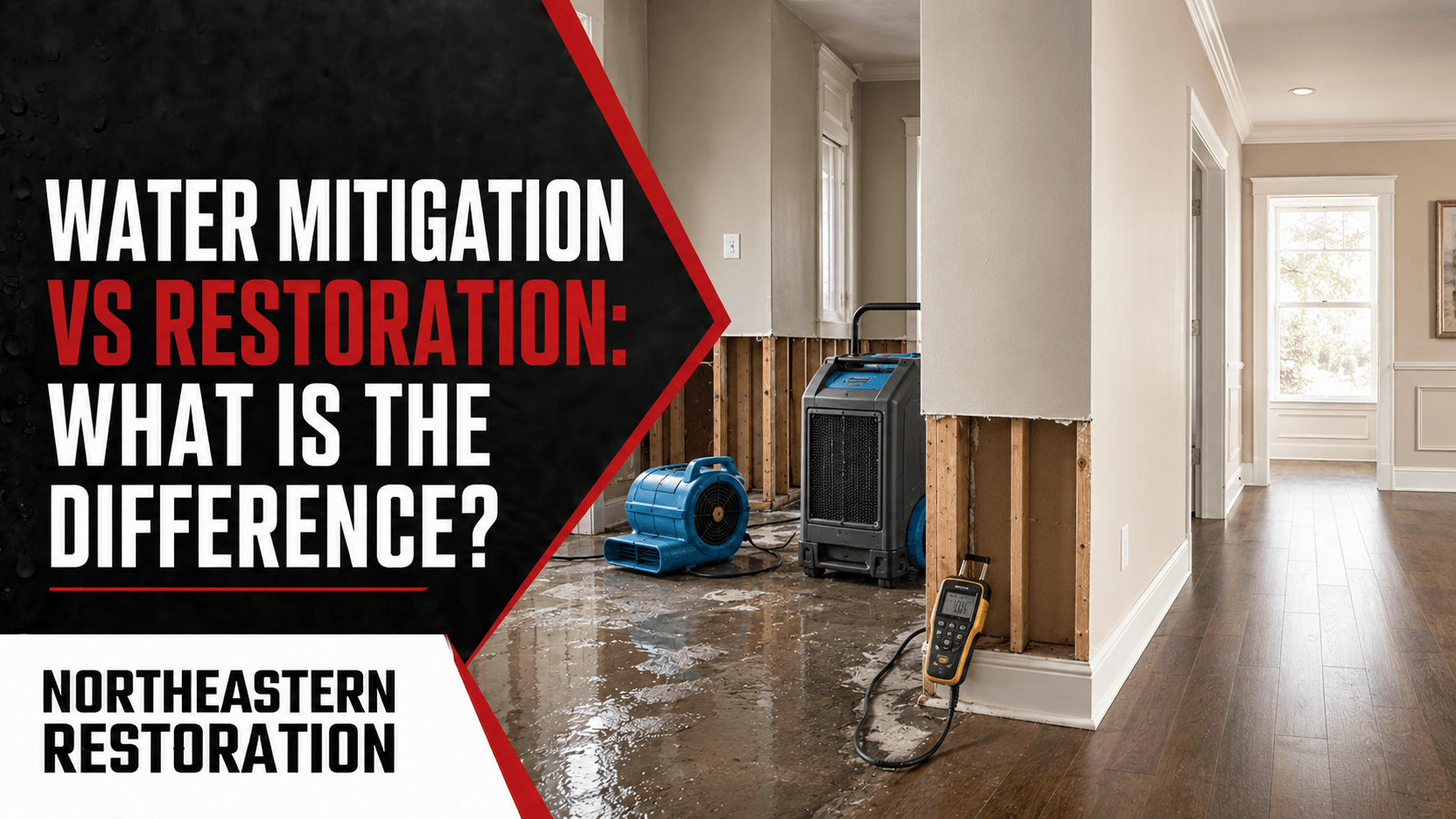
- Industrial air movers. High-velocity fans are positioned to maximize airflow across structural surfaces, accelerating the evaporation of moisture from materials that are damp but not saturated enough to extract.
- Commercial dehumidifiers. These capture moisture as it evaporates from building materials, preventing it from re-depositing elsewhere in the structure. Without dehumidification, air movers alone are ineffective.
- Calibrated moisture meters. Technicians monitor dryness levels at multiple points throughout the affected area each day, adjusting equipment placement as materials dry and documenting progress for both insurance and quality purposes.
In Athens, GA, where outdoor humidity levels are already elevated, drying typically takes three to five days. Heavily saturated materials, finished basements, or structures with limited airflow can extend this timeline.
Step 4: Cleaning, Sanitizing, and Mold Prevention
Once moisture readings confirm the structure has reached dry standard, the affected areas require thorough cleaning and antimicrobial treatment before reconstruction begins. In Athens, Georgia, skipping this step — or doing it incompletely — is one of the most common reasons mold returns shortly after a restoration job is finished.
The cleaning phase addresses all surfaces that were exposed to water, regardless of water category, with products and methods appropriate to the contamination level. HEPA vacuuming removes debris. Antimicrobial agents are applied to structural surfaces — framing, subfloors, concrete — to eliminate residual microbial growth and inhibit future colonization. When gray or black water was involved, additional deodorization and air scrubbing address contaminants that have become airborne.
Step 5: Reconstruction and Final Restoration
The final phase is returning your home to exactly the condition it was in before the water event. Everything removed during mitigation — drywall, insulation, flooring, trim, cabinetry — is replaced during reconstruction. In Athens, GA, a full-service restoration company handles this phase in-house, which means you have one contractor and one point of contact rather than separately managing a restoration crew and a general contractor.
Reconstruction work includes installing and finishing new drywall, replacing flooring materials to match the existing finish, reinstalling trim and cabinetry, painting repaired areas, and repairing or replacing any affected plumbing, electrical, or HVAC components identified during the job. The process concludes with a final walkthrough and documented confirmation that the property has been returned to its pre-loss condition — the documentation your insurer needs to close the claim.
Frequently Asked Questions
Can I stay in my home during the restoration process?
Often, yes. Minor to moderate water events contained to one or two rooms typically allow the rest of the home to remain occupied. Larger events involving significant demolition, black water, or mold may require temporary relocation for the health and safety of occupants.
How do I know when the drying phase is truly complete?
Rely on documented moisture readings — not how the walls feel to the touch. Your restoration contractor should provide daily readings showing progress toward the dry standard for your material types. Reconstruction should not begin until those numbers are confirmed.
Will repaired areas look the same as the rest of my home?
In most cases, yes. Skilled restoration contractors match texture, finish, and paint color as precisely as possible. Minor variations may occasionally be visible where older materials are difficult to match exactly, but the goal and standard is an indistinguishable final result.
What is the difference between restoration and remodeling?
Restoration returns your home to its pre-loss condition. Remodeling changes or upgrades it. Insurance covers restoration to like-for-like. If you choose to upgrade materials or layouts during the process, the cost difference between the standard replacement and the upgrade is typically your out-of-pocket responsibility.
How is the restoration scope documented for my insurance company?
Your contractor provides a detailed written scope of work itemizing every service performed, every material removed, and every material replaced. Combined with before-and-after photographs and daily moisture logs, this documentation forms the basis of your insurance claim.
A Structured Process Built Around Getting Your Life Back
Every step of the water damage restoration process has a purpose, every decision is based on measurable data, and the entire sequence is designed around one outcome: returning your home to normal — completely and correctly. When the work is done right, the result is indistinguishable from the home you had before the water event.
Northeastern Restoration follows a thorough, fully documented restoration process for every job in Athens, GA and surrounding communities. From the emergency call through the final walkthrough, our IICRC-certified team keeps you informed at every stage and works directly with your insurance company throughout. Call us anytime at
(678) 235-9436.