Water Mitigation vs Restoration: What Is the Difference?
Two Terms You'll Hear After Every Water Event
If you have called a water damage company or reviewed a homeowners insurance policy, you have probably seen both terms: water mitigation and water restoration. They are often used interchangeably in casual conversation, but they describe two distinct phases of the recovery process with different goals, different timelines, and different costs. Understanding what each phase actually involves — and why the distinction matters — helps you communicate more clearly with your contractor, navigate your insurance claim with confidence, and know what to expect at each stage of your home's recovery.
What Water Mitigation Is and What It Does
Water mitigation is the first phase. Its sole goal is to stop the damage from getting worse. When water enters a home in Athens, GA — from a burst pipe, a storm, an appliance failure — it immediately begins saturating materials, migrating to adjacent areas, and creating the conditions for mold growth. Mitigation is the emergency intervention that limits that spread and stabilizes the situation.
Think of it as emergency medicine for your home. A mitigation crew doesn't rebuild anything. They stop the bleeding. The work is fast, equipment-intensive, and time-sensitive — because every hour water sits, it spreads further and penetrates deeper into structural materials.
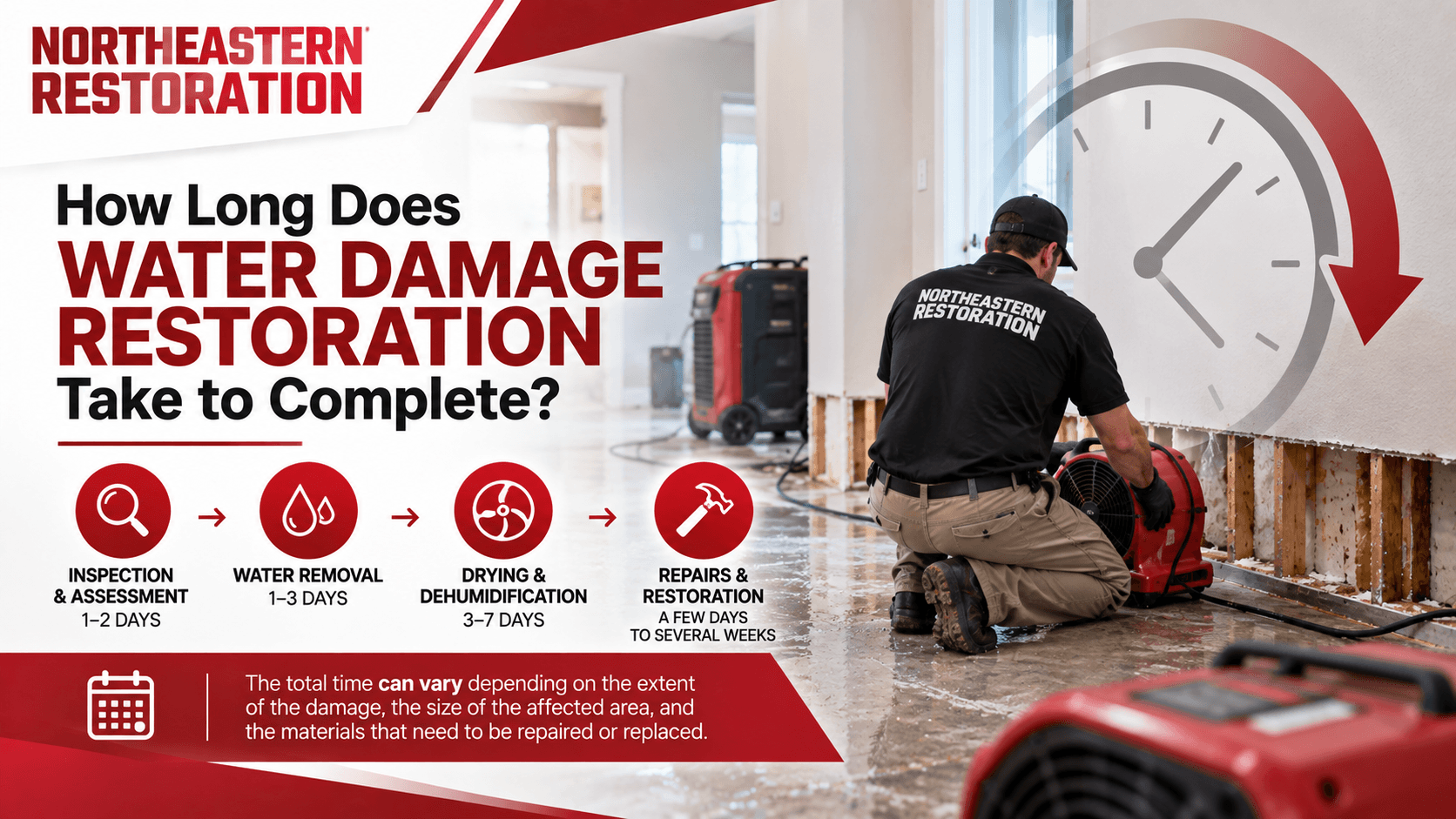
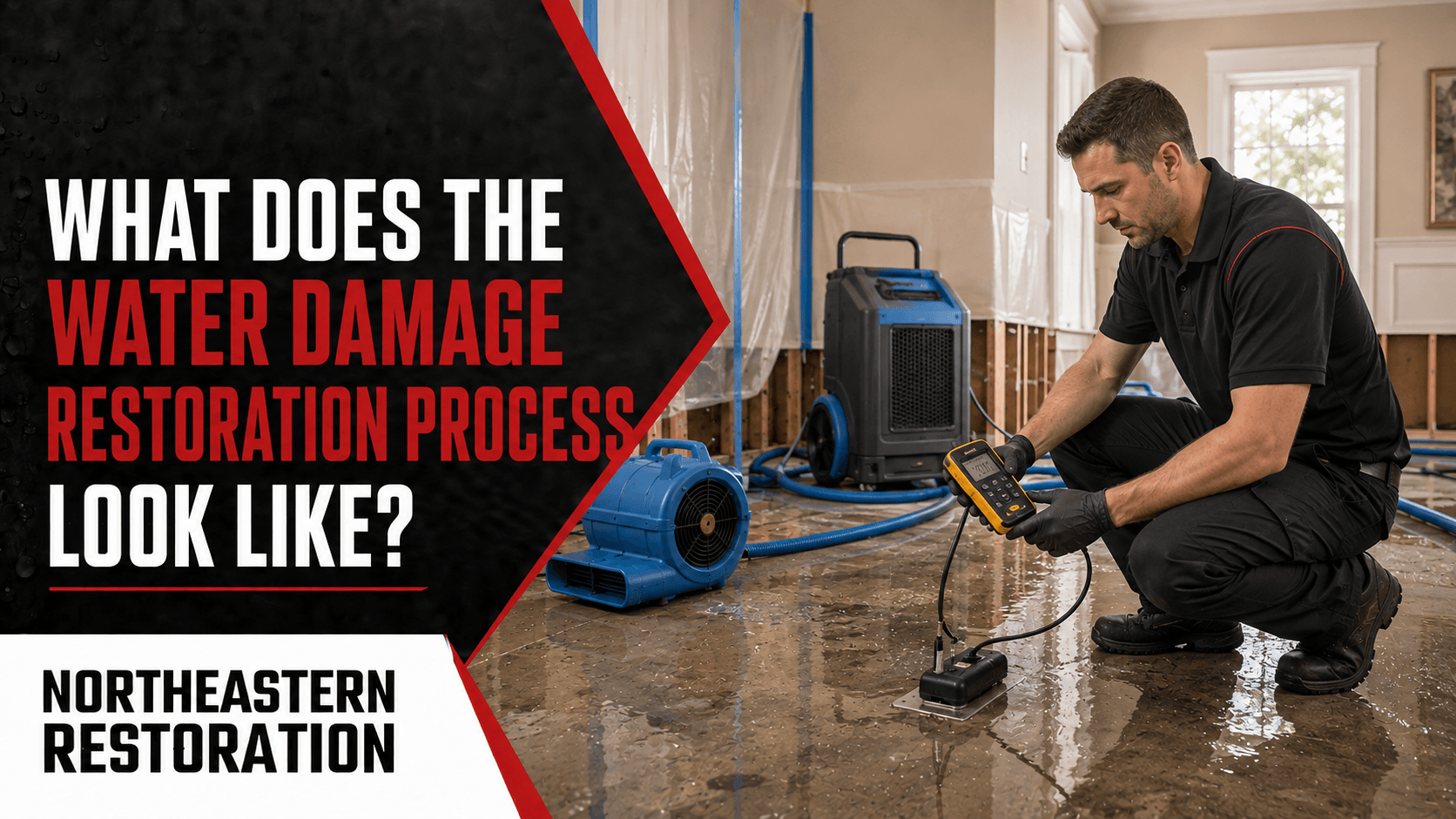
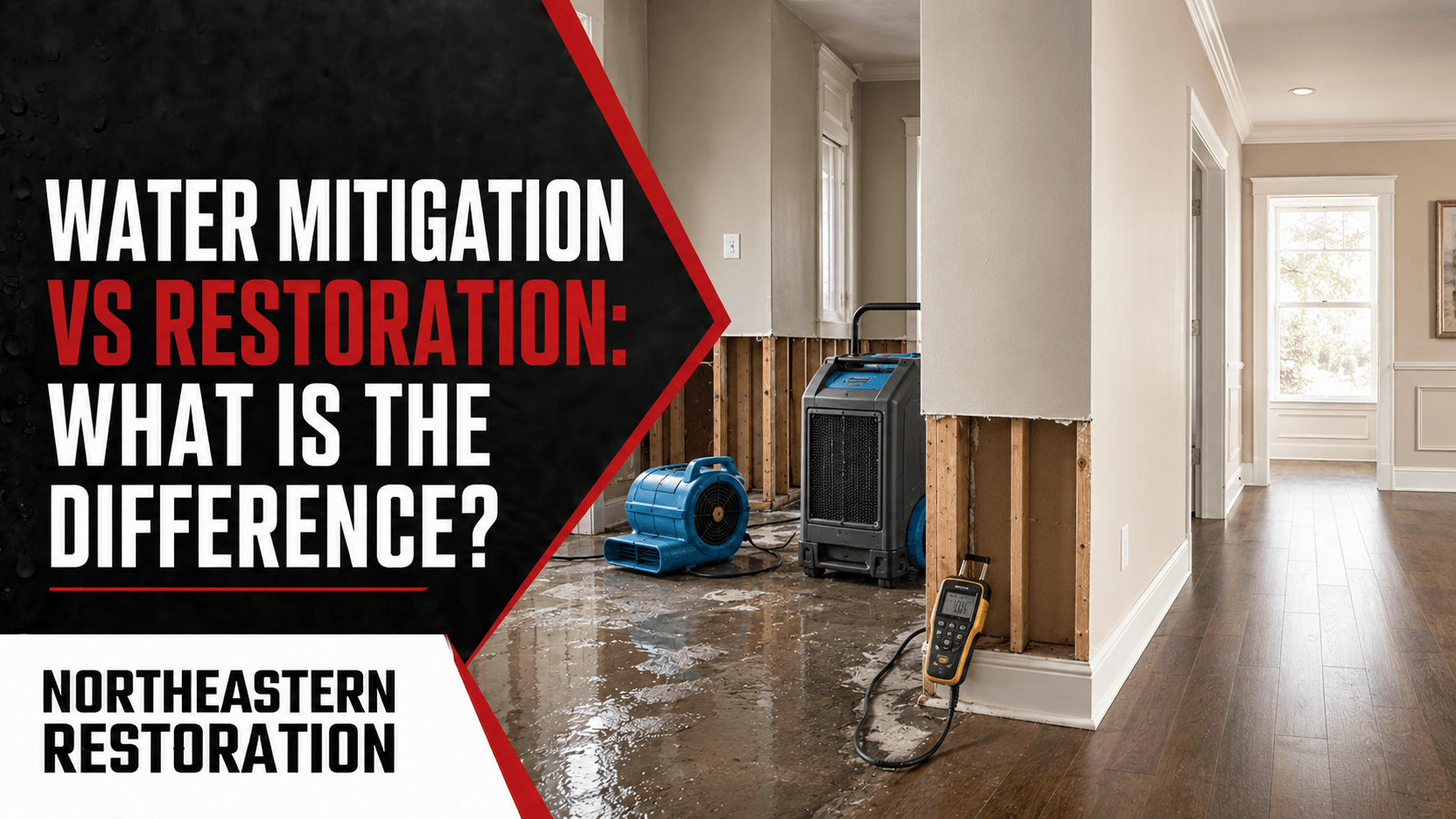
Water mitigation typically includes emergency water extraction, containment or repair of the water source, removal of saturated materials that cannot be dried in place, placement of commercial drying equipment, daily moisture monitoring throughout the drying period, and antimicrobial treatment to prevent mold colonization. When the drying phase is complete and moisture readings confirm the structure is dry, mitigation ends and restoration begins.
What Water Restoration Is and What It Does
Water restoration is the second phase. It begins only after the affected area has been fully dried and any mold risk has been controlled. Restoration is the process of returning your home to the condition it was in before the water event occurred.
Where mitigation stabilizes, restoration rebuilds. Everything that was damaged or deliberately removed during the mitigation phase — drywall, insulation, flooring, trim, cabinetry — is replaced during restoration. The work is slower, more deliberate, and trade-focused. It looks more like a construction project than an emergency response.
Water restoration in Athens, Georgia typically involves replacing drywall and insulation, refinishing or replacing flooring, repainting walls and ceilings, repairing or replacing cabinetry and fixtures, addressing any structural repairs identified during mitigation, and conducting a final inspection and documentation confirming the property has been returned to its pre-loss condition.
Mitigation vs. Restoration: A Direct Comparison
The table below places the two phases side by side to clarify the key differences in goals, timing, services, and insurance handling.
| Category | Water Mitigation | Water Restoration |
|---|---|---|
| Primary Goal | Stop damage from spreading | Return home to pre-loss condition |
| When It Happens | Immediately — cannot wait | After area is confirmed fully dry |
| Type of Work | Extraction, drying, containment | Reconstruction, replacement, finishing |
| Equipment Used | Pumps, air movers, dehumidifiers | Construction tools and materials |
| End Result | Stabilized, dry structure | Home restored to original condition |
| Insurance Billing | Typically processed as emergency | Subject to adjuster's scope review |
| Who Performs It | Restoration or mitigation contractor | Restoration or general contractor |
Why the Distinction Matters for Your Insurance Claim in Athens, Georgia
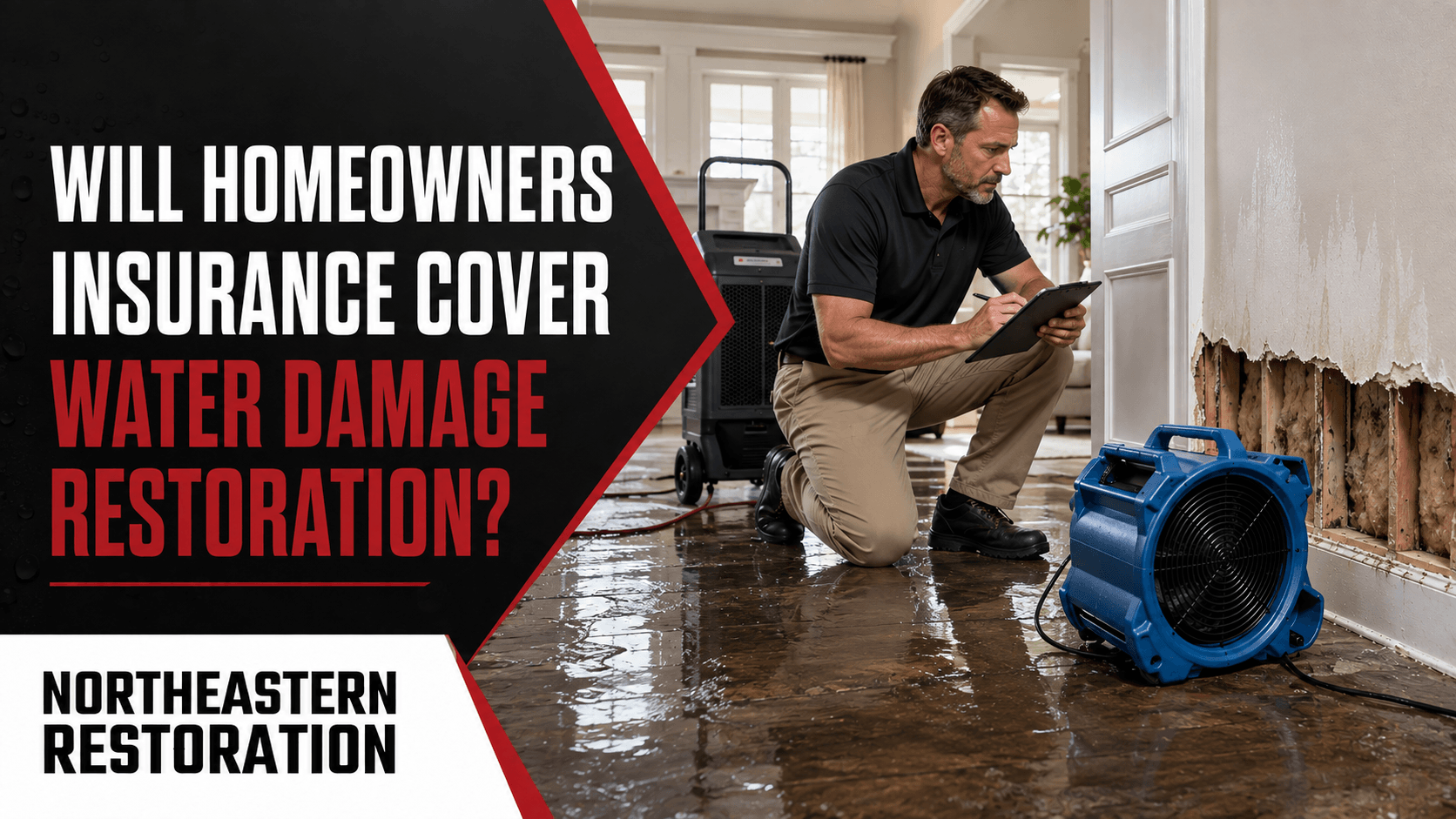
Insurance companies treat mitigation and restoration as separate line items, and the two phases may be reviewed and approved on different timelines. Understanding how insurers view each phase helps homeowners in Athens, GA navigate the claims process without surprises.
- Mitigation is almost always covered when the underlying event is a covered peril. Insurers specifically expect policyholders to take immediate action to prevent further damage — and that's exactly what mitigation is.
- Restoration coverage is subject to more detailed review. Your adjuster will assess the scope of damage and compare it against the contractor's proposed restoration plan. Coverage is subject to your policy limits.
- Actual cash value vs. replacement cost matters here. Some policies reimburse depreciated value rather than full replacement cost for materials. This affects how much you receive for flooring, drywall, and other replaced materials.
- Separate documentation for each phase strengthens your claim. Keeping mitigation and restoration as distinct documented scopes of work makes the claims process cleaner and reduces the risk of disputes.
- A good restoration contractor communicates with your adjuster on your behalf. This ensures the scope of loss documentation matches what the adjuster needs, reducing back-and-forth delays.
Frequently Asked Questions
Can the same company handle both mitigation and restoration?
Yes, and it's often the better choice. Full-service restoration companies — like those serving Athens, GA — manage both phases under one roof. This eliminates coordination gaps, keeps documentation consistent, and gives you a single point of contact throughout the entire recovery process.
Does mitigation have to be fully complete before restoration begins?
Yes. Beginning reconstruction before an area is fully dried traps moisture inside new walls and flooring, creating the conditions for mold growth within weeks. Moisture readings must confirm the structure is at dry standard before any reconstruction begins.
How long does the mitigation phase typically take?
The drying phase typically runs three to five days under controlled conditions. In Georgia's humid climate, it may take longer depending on the extent of saturation, material types, and ambient humidity levels. Equipment is monitored daily and adjusted as drying progresses.
Is water mitigation covered by homeowners insurance?
When the water event is a covered peril, mitigation is generally covered. Most policies explicitly require the policyholder to take reasonable steps to mitigate damage — and emergency extraction and drying meets that standard. Always confirm coverage with your insurer before work begins.
What happens if I skip mitigation and go straight to repairs?
Skipping proper drying before reconstruction almost always leads to mold growth, structural deterioration, and the need for additional repairs within months. It can also void any warranty on the reconstruction work and create complications with your insurance claim.
Two Phases, One Goal
Mitigation and restoration are not competing services. They are sequential phases of the same recovery process, and both are essential to a complete outcome. Mitigation is urgent — it cannot wait. Restoration takes time and careful planning. Doing them in order, with proper documentation at each stage, gives you the best result for your home and the strongest position in your insurance claim.
Northeastern Restoration is a full-service restoration company serving Athens, GA and surrounding counties. We manage both mitigation and restoration under one team, with a single point of contact from emergency extraction through the final walkthrough. Call us at
(678) 235-9436 any time.