How Long Does Water Damage Restoration Take to Complete?
Quick Answer: 3 Days to Several Weeks, Depending on Four Factors
Water damage restoration takes 3 to 5 days for minor events, 7 to 14 days for moderate damage, and 2 to 4 weeks or longer for severe cases requiring reconstruction. The four variables that control the timeline are the extent and category of the water damage, how quickly the job was started, the types of materials affected, and the ambient humidity — which is a significant factor in Athens, GA, where outdoor humidity regularly exceeds 80 percent in summer. Each of these is explained in detail below.
The Four Factors That Determine How Long Restoration Takes
Restoration timelines are dictated by measurable physical conditions that evolve as work progresses. These four variables account for nearly all of the variation between jobs:
1. Extent and Category of the Water Damage
A saturated single room and a flooded multi-room basement are not comparable in scope. Beyond size, the water category changes the timeline significantly. Clean water from a broken supply line requires less decontamination than gray water from an appliance or black water from sewage, both of which involve additional treatment steps that extend the overall job.
2. How Quickly Professional Extraction Began
Every hour between the water event and professional extraction gives moisture more time to spread and penetrate deeper into building materials. A job started within two hours may be substantially complete within four to five days. The same event left unaddressed for 24 hours may require two to three times as long because materials are more deeply saturated and mold risk must be actively managed throughout drying.
3. Types of Materials Affected
Different materials dry at very different rates. Concrete and masonry hold moisture far longer than painted drywall. Hardwood flooring requires slow, controlled drying over many days to prevent cracking. Subfloors with multiple laminated layers trap moisture between them. The specific material mix in the affected area is one of the most significant variables in determining when drying equipment can safely be removed.
4. Ambient Humidity in Athens, Georgia
Athens, GA maintains some of the highest ambient humidity levels in the country for extended periods each year. High outdoor humidity slows the evaporative drying process and forces commercial dehumidifiers to work harder to achieve the same result. Jobs that complete in three days in a drier climate commonly take four to five days in Georgia, particularly during summer months.
Water Damage Restoration Timeline: Phase by Phase
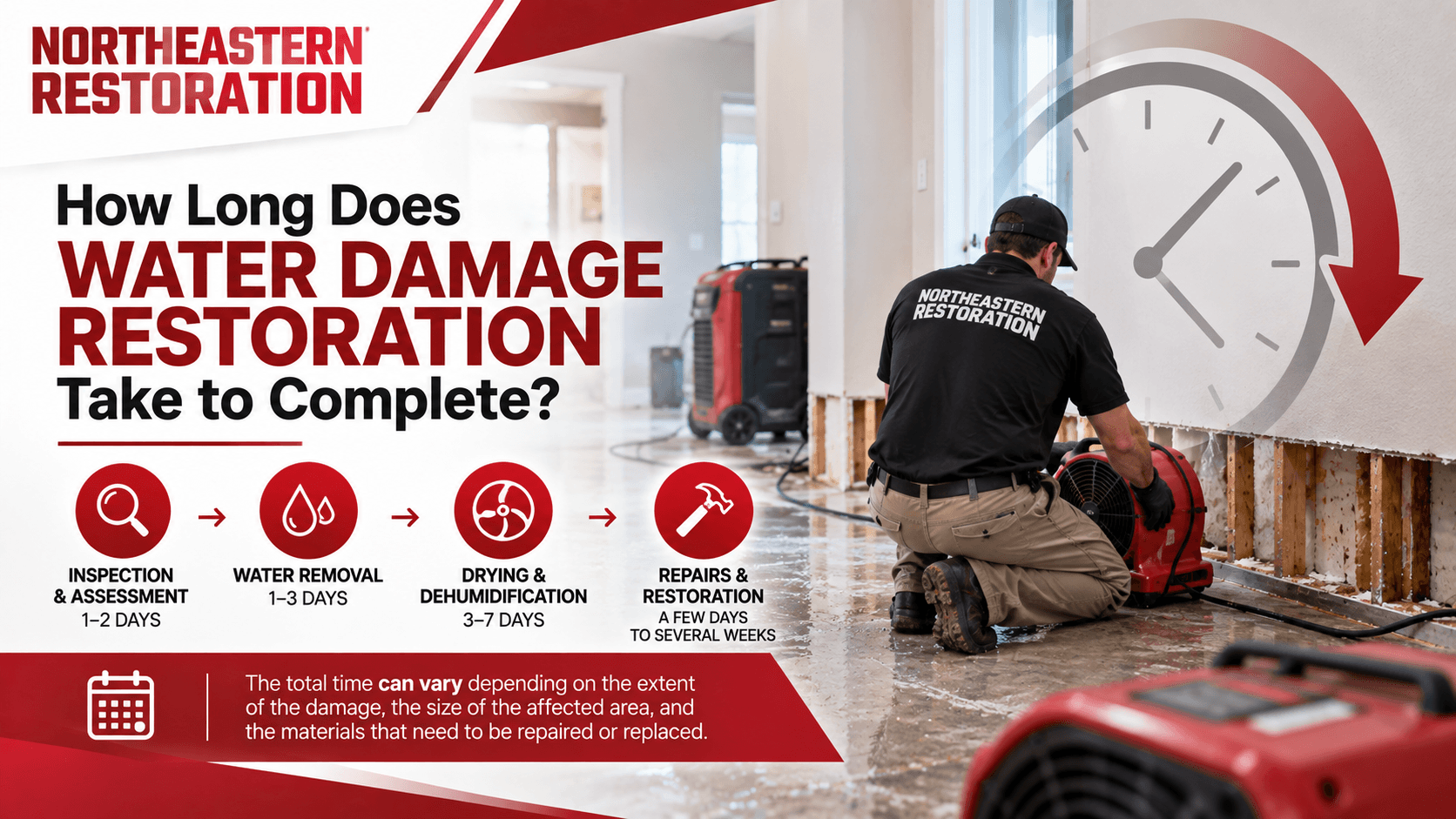
A complete water damage restoration job moves through five sequential phases. The ranges below reflect typical durations for a moderate event affecting one to several rooms without major structural compromise:
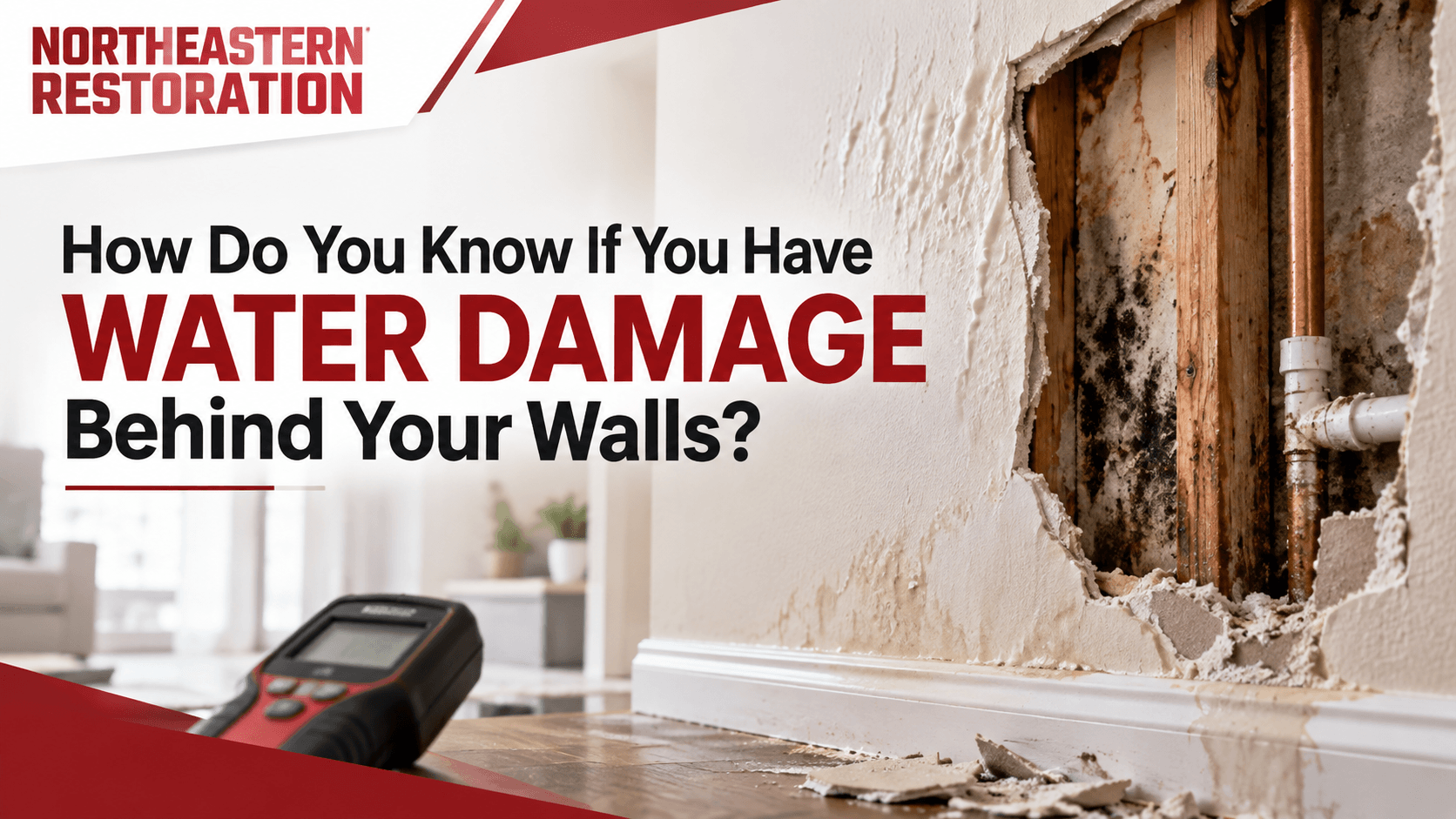
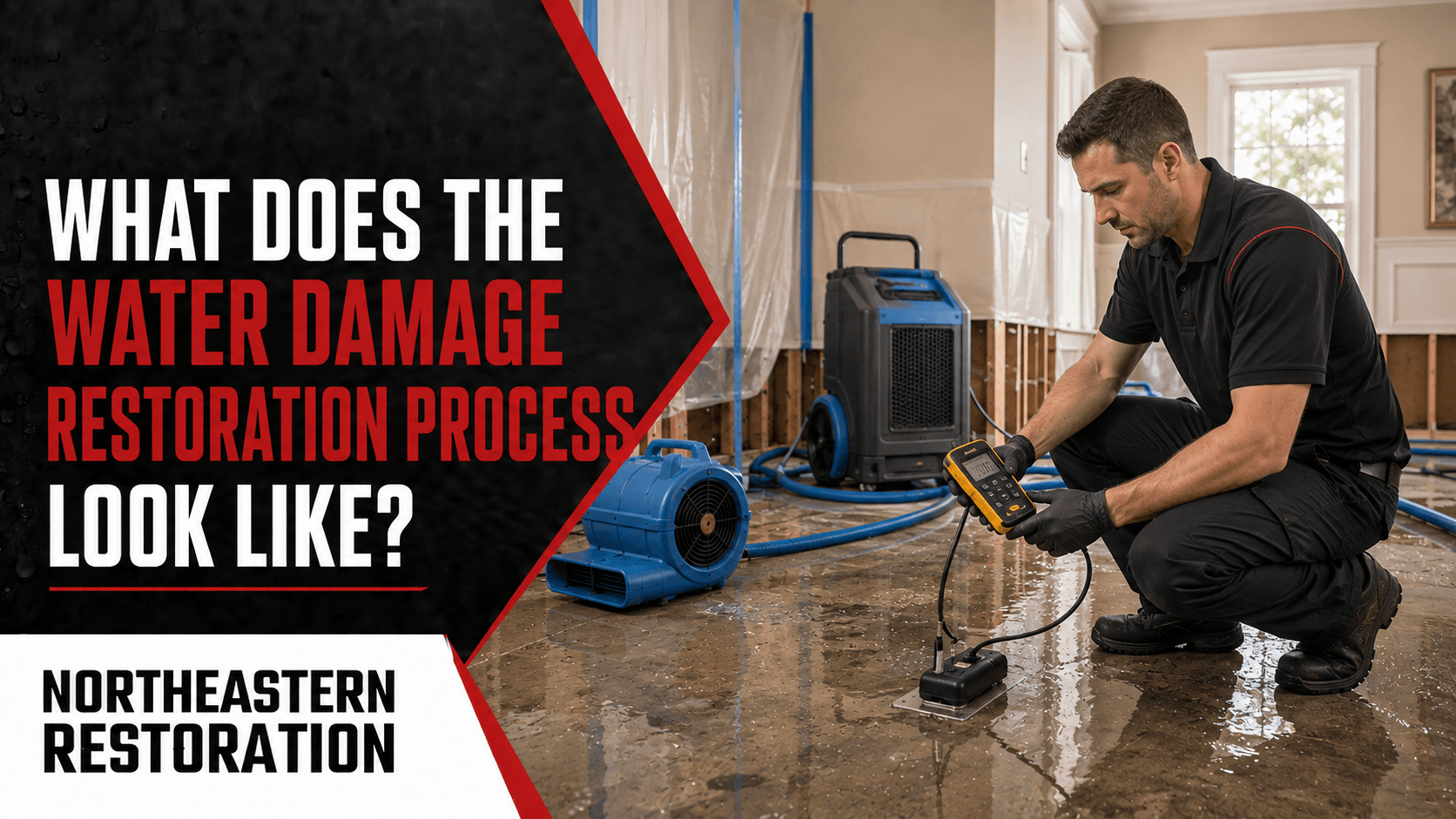
- Emergency assessment (Day 1, 1–3 hours): The team inspects the full damage extent, maps moisture with meters and thermal imaging, classifies the water category, documents everything for insurance, and establishes the scope of work before any equipment is deployed.
- Water extraction (Day 1, 2–6 hours): Industrial extraction units remove standing water and surface moisture. Saturated materials that cannot be dried in place — carpet padding, soaked insulation — are removed and disposed of during this phase.
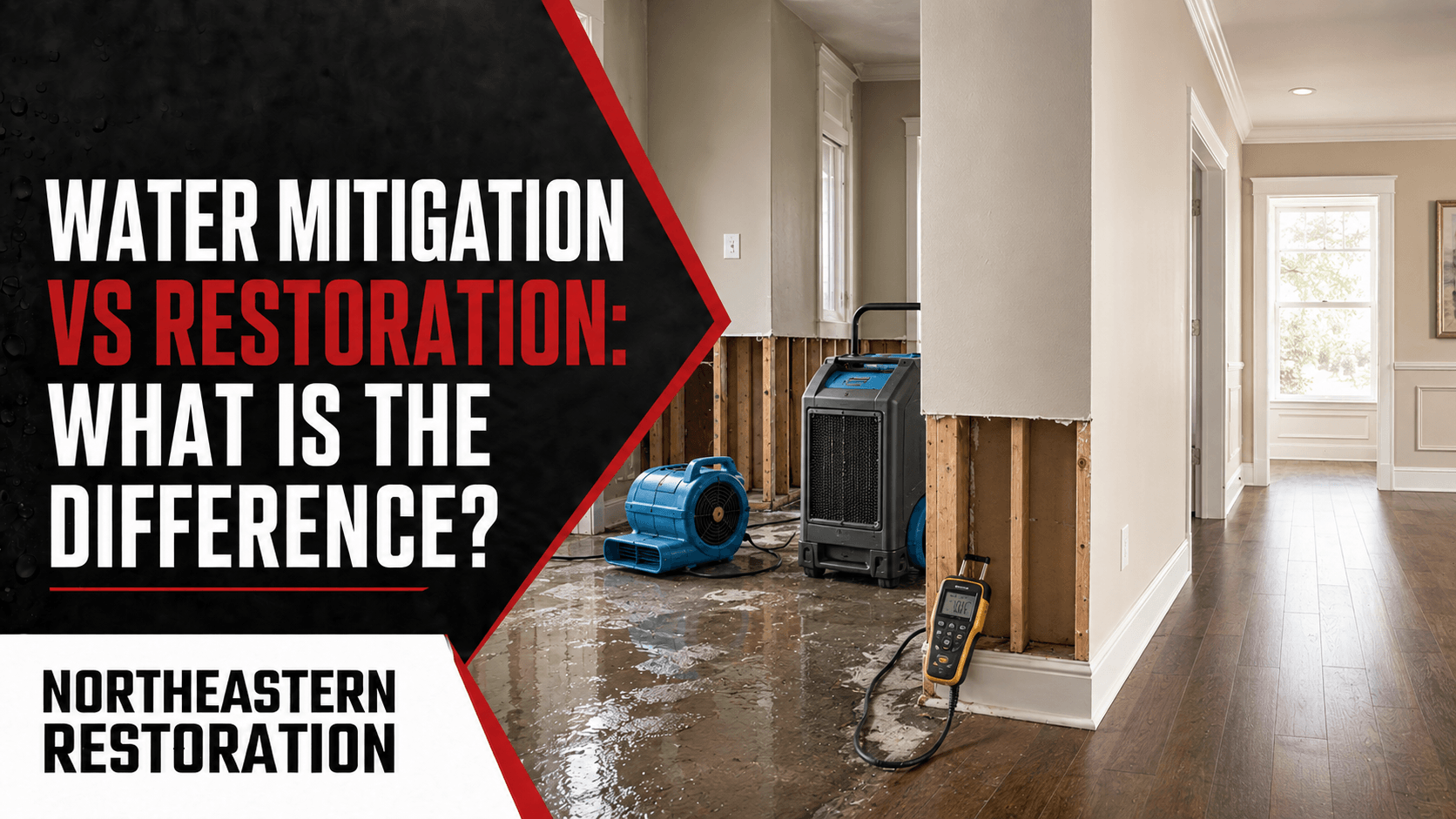
- Structural drying (Days 1–5): Commercial air movers and dehumidifiers run continuously. Moisture readings are recorded daily. Equipment is adjusted as materials dry and is not removed until readings confirm dry standard for each material type.
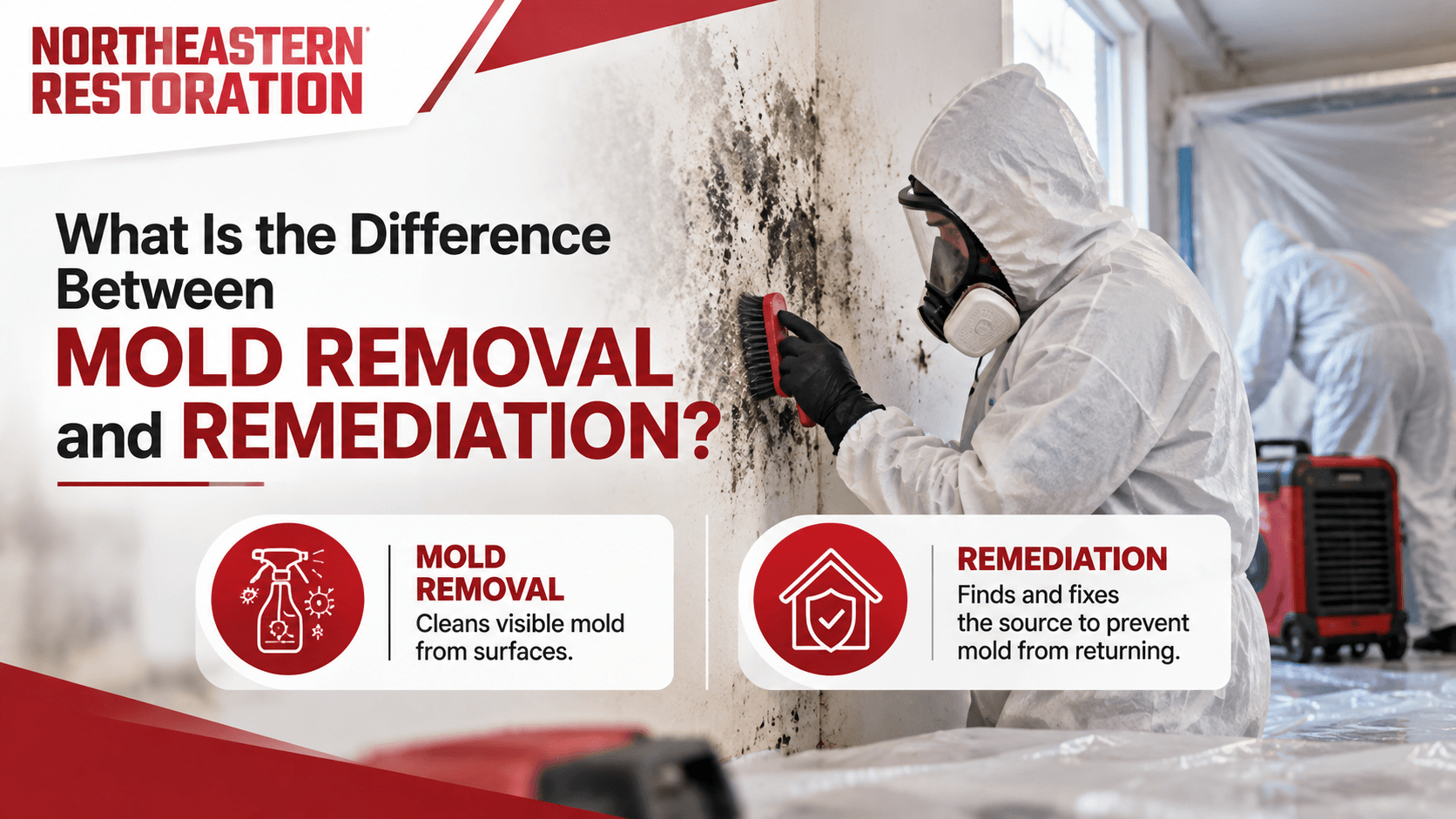
- Cleaning, sanitizing, and mold prevention (Days 3–6): Once structural drying is well progressed, surfaces are cleaned and treated with antimicrobial agents. Deodorization is performed when the water category requires it. This phase often overlaps with the final stages of drying.
- Reconstruction (Days 5–30+, scope dependent): Everything removed during mitigation — drywall, flooring, insulation, trim, cabinetry — is replaced. Single-room jobs may finish within a week. Multi-room or structurally complex events can take several weeks.
Water Damage Restoration Timeline by Damage Severity in Athens, GA
The table below shows how total timeline — from first call through final completion — typically varies based on the overall scope of the water event.
| Damage Level | Typical Scenario | Estimated Total Timeline |
|---|---|---|
| Minor | Single room, clean water, immediate response | 3–5 days total |
| Moderate | Multiple rooms, delayed response, or gray water | 7–14 days total |
| Severe | Structural compromise, black water, or mold present | 2–4 weeks total |
| Reconstruction required | Significant material replacement after drying | Add 1–3 weeks to mitigation timeline |
| Mold remediation add-on | Mold developed before drying began | Add 3–7 days minimum |
How to Keep Your Water Damage Restoration Timeline as Short as Possible
Homeowners in Athens, Georgia have more influence over the restoration timeline than most realize. These decisions, made in the first hours after a water event, directly affect how long the overall process takes:
- Call immediately. Every hour of delay increases saturation depth and total drying time. No decision shortens the timeline more than this one.
- Do not attempt to dry with household fans. Standard fans move air but cannot remove moisture from structural assemblies at the rate required. They also risk spreading moisture to unaffected areas.
- Allow full access for equipment placement. Drying equipment works most efficiently when positioned according to moisture readings and airflow calculations. Moving or restricting equipment extends the timeline.
- Do not rush the drying phase. Beginning reconstruction before moisture meters confirm dry standard traps moisture inside new materials, causing mold within weeks and requiring costly redo work.
- Keep windows closed during active drying. In Athens, GA, outdoor humidity frequently exceeds the controlled indoor environment the dehumidifiers are creating. Opening windows counteracts the equipment directly.
Frequently Asked Questions About Water Damage Restoration Time
Can adding more drying equipment significantly speed up the process?
To a point — but proper placement matters more than quantity. A qualified technician sizes the equipment load for the square footage and material types involved. Adding uncoordinated equipment without adjusting airflow can be counterproductive.
What happens if reconstruction starts before drying is confirmed complete?
Moisture trapped inside new drywall, insulation, and flooring creates ideal mold conditions within two to four weeks. The reconstruction then has to be torn out and redone — adding far more time and cost than the few days saved by starting early.
Does the restoration timeline affect when my insurance claim closes?
The restoration and claims timelines run in parallel but independently. Your adjuster may issue payment while reconstruction is still in progress. Document all phases thoroughly so your claim reflects the full completed scope, including any supplements for damage discovered mid-job.
Will my home be livable during water damage restoration?
For minor to moderate events, typically yes — most of the home remains usable while equipment runs in the affected area. Severe events, black water contamination, or significant mold typically require temporary relocation. Your restoration contractor will advise based on the specific situation.
What causes water damage restoration to take longer than estimated?
The most common causes are hidden moisture discovered during drying that expands the affected area, mold requiring additional remediation steps, and structural damage requiring more reconstruction than the initial assessment indicated. A thorough initial assessment reduces but cannot eliminate these discoveries.
Plan Around a Realistic Water Damage Restoration Timeline
Restoration timelines are driven by physics — how quickly moisture leaves building materials under controlled conditions — not by scheduling preferences. Understanding the phases and the decisions that influence duration helps you plan intelligently and avoid declaring the process finished before the moisture meters confirm it.
Northeastern Restoration keeps homeowners in Athens, GA and surrounding counties informed at every stage of the restoration process, with daily moisture readings and clear communication about what comes next. If you are dealing with water damage and want an honest timeline assessment, call us at
(678) 235-9436 any time.