Can Water Damage Cause Mold in Athens, GA Homes?
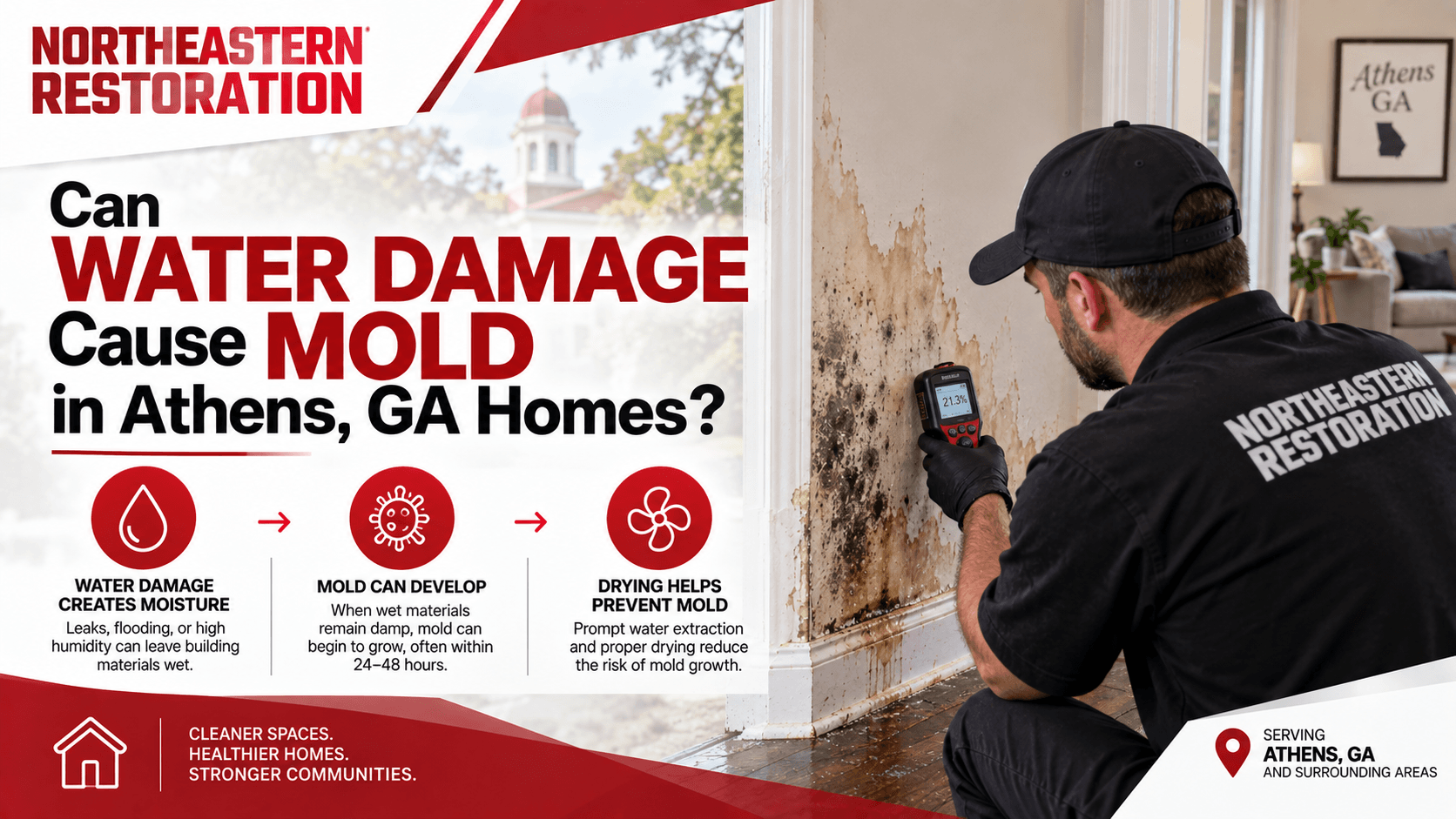
Yes — and in Athens, GA, It Can Start Within 24 Hours
Yes, water damage causes mold — and in Athens, GA, it can begin within 24 to 48 hours of a water event. Mold needs only three things to grow: a food source (building materials), the right temperature (most occupied homes qualify year-round), and moisture (which water damage introduces directly into walls, floors, and structural components). Athens's combination of high ambient humidity and warm temperatures year-round means mold development after water damage is faster here than in most of the country. This guide explains how quickly it happens, where it develops, how to recognize early signs, and how to stop it before it becomes a remediation problem.
How Quickly Mold Grows After Water Damage
Mold development after a water event is not a slow process. Under conditions typical of most Athens, Georgia homes — warm temperatures and elevated baseline humidity — spores begin colonizing damp surfaces within 24 to 48 hours of initial water contact. Visible surface mold typically appears between 48 hours and one week, depending on temperature and material type.
This timeline catches homeowners off guard. A water event that appears to have dried on its own over a few days may still have produced the moisture conditions needed for mold colonization inside wall cavities, beneath flooring, or within insulation — areas where evaporation is slow and air circulation is minimal. The surface looks and feels dry. Inside the wall assembly, moisture levels remain elevated long enough for mold to establish.
The progression follows predictable stages. In the first 24 hours, spores land on damp surfaces and begin germinating. By 48 to 72 hours, germinated spores extend root structures into porous materials. By the end of the first week, visible colonies are typically present on the surface of affected drywall, wood, or insulation — while the root structure is already embedded well below what is visible.
Where Mold Is Most Likely to Develop After Water Damage in Athens, Georgia
Mold grows most aggressively in areas that combine organic building materials with limited airflow. These four locations require the most thorough moisture monitoring after any water event:
Inside Wall Cavities
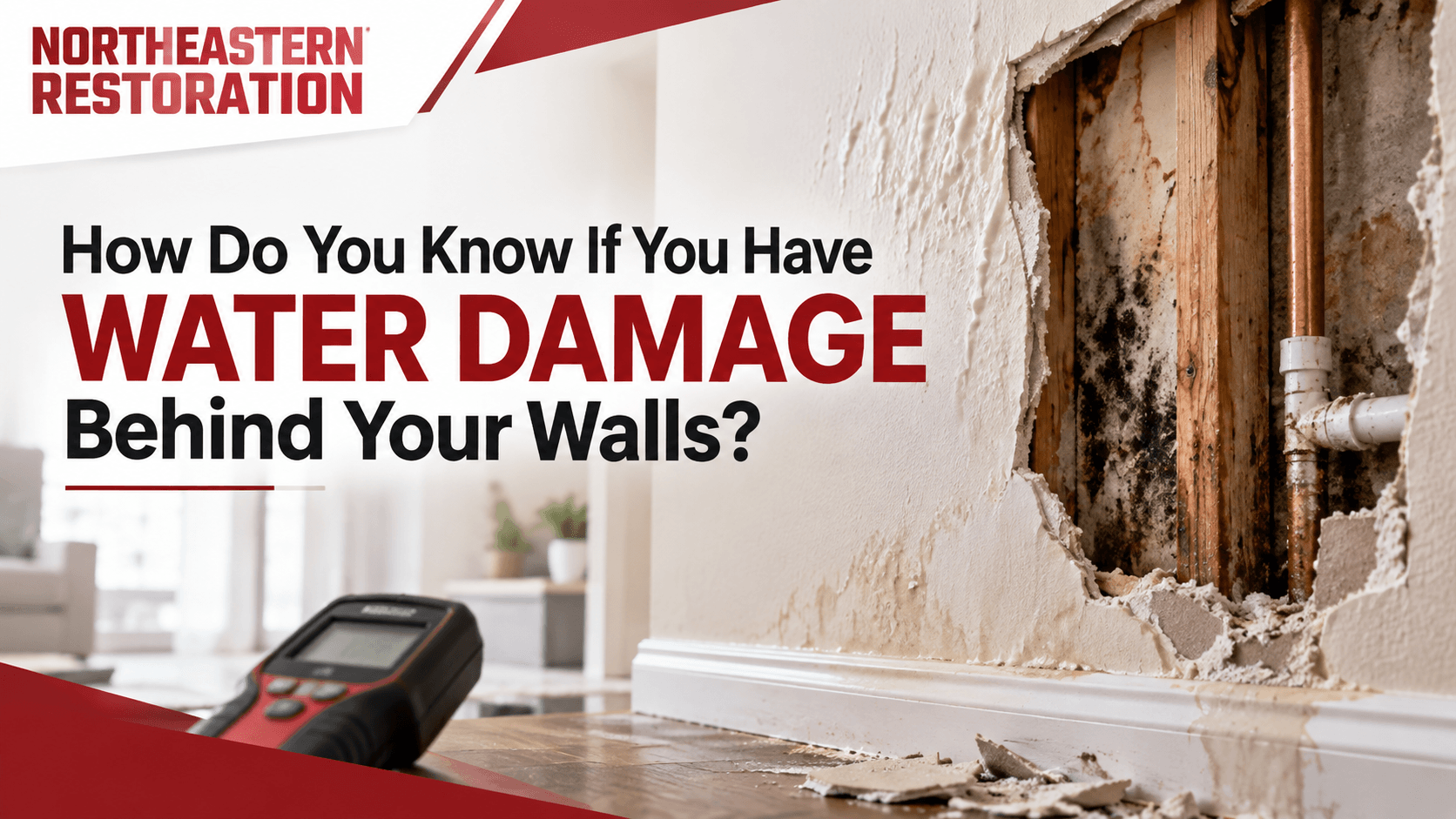
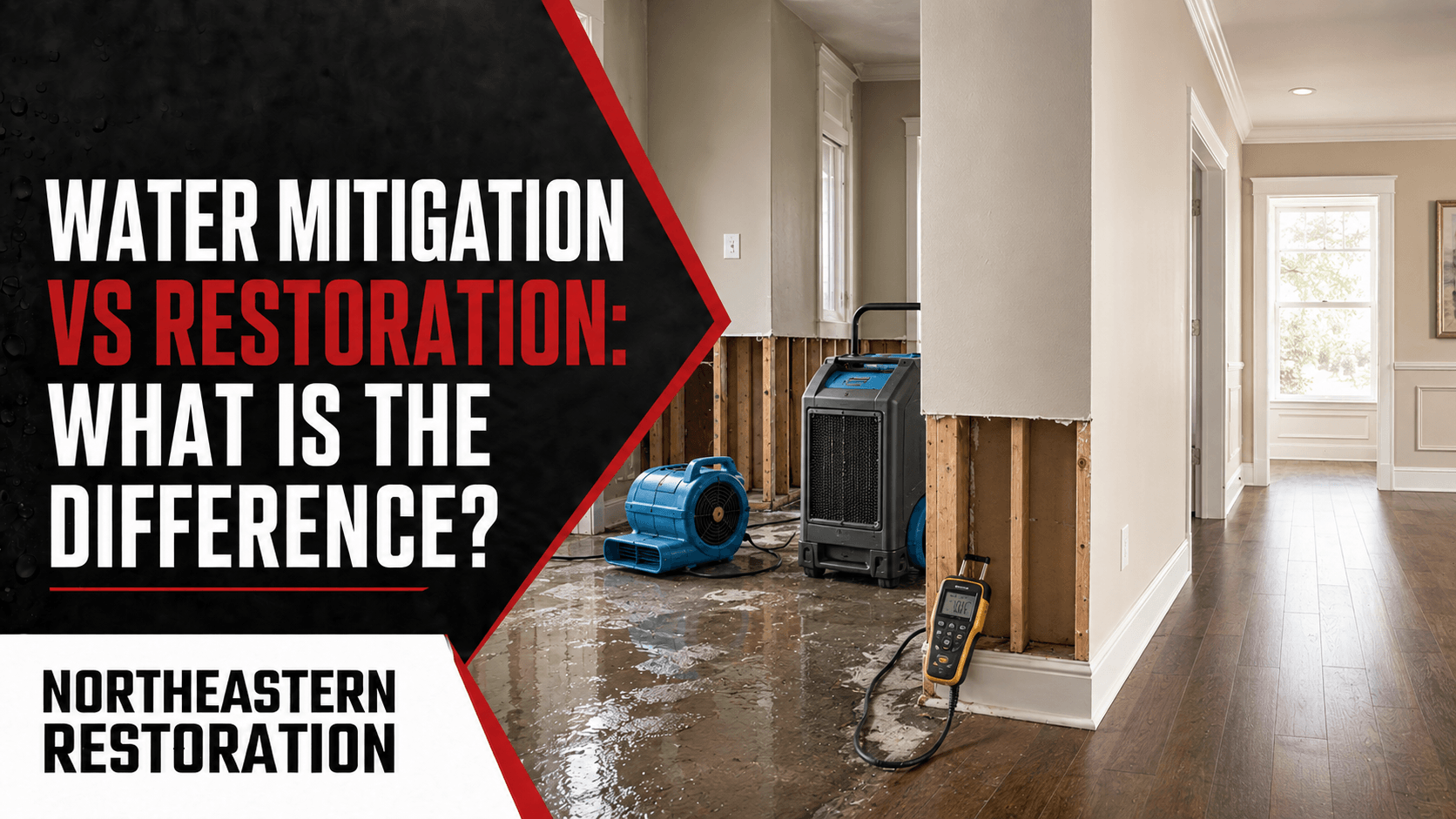
Drywall's paper facing is an excellent mold food source, and wall cavity interiors have minimal air circulation. When water infiltrates from a pipe leak, roof penetration, or appliance overflow, it can remain inside wall cavities long after the surface appears dry — providing sustained moisture for mold that goes undetected until visible signs appear weeks later.
Subfloors and Flooring Systems
Water migrates through seams, nail holes, and grout lines to the subfloor beneath finished flooring. Once there, it is trapped between the subfloor and the surface material with no airflow and no way to evaporate naturally. Hardwood, laminate, and tile all create this sealed environment, making subfloor mold development common after any water event in Athens, GA.
Crawl Spaces and Basements
Crawl spaces already maintain elevated humidity from ground moisture vapor. Any additional water intrusion accelerates mold growth significantly. Basement walls and floors hold moisture in their pores long after surfaces appear dry, providing sustained conditions for mold on adjacent organic materials — wood framing, insulation, and finished drywall.
HVAC Systems
If the heating and cooling system operated during or after a water event, moisture can enter ductwork through the air handling unit, condensation, or duct sections passing through affected areas. Once mold establishes inside ductwork, the system distributes spores to every room every time it runs — turning a localized problem into a whole-house air quality issue.
Signs That Mold Has Already Started Growing After Water Damage
If any of the following signs appear in the days to weeks after a water event in your Athens, GA home, mold has likely begun developing and professional assessment is warranted without delay:
- Musty or earthy odor: The most reliable early indicator. Mold produces volatile organic compounds during growth that create a distinctive smell even before any colony is visible. If a room smells musty after a water event, assume mold is developing.
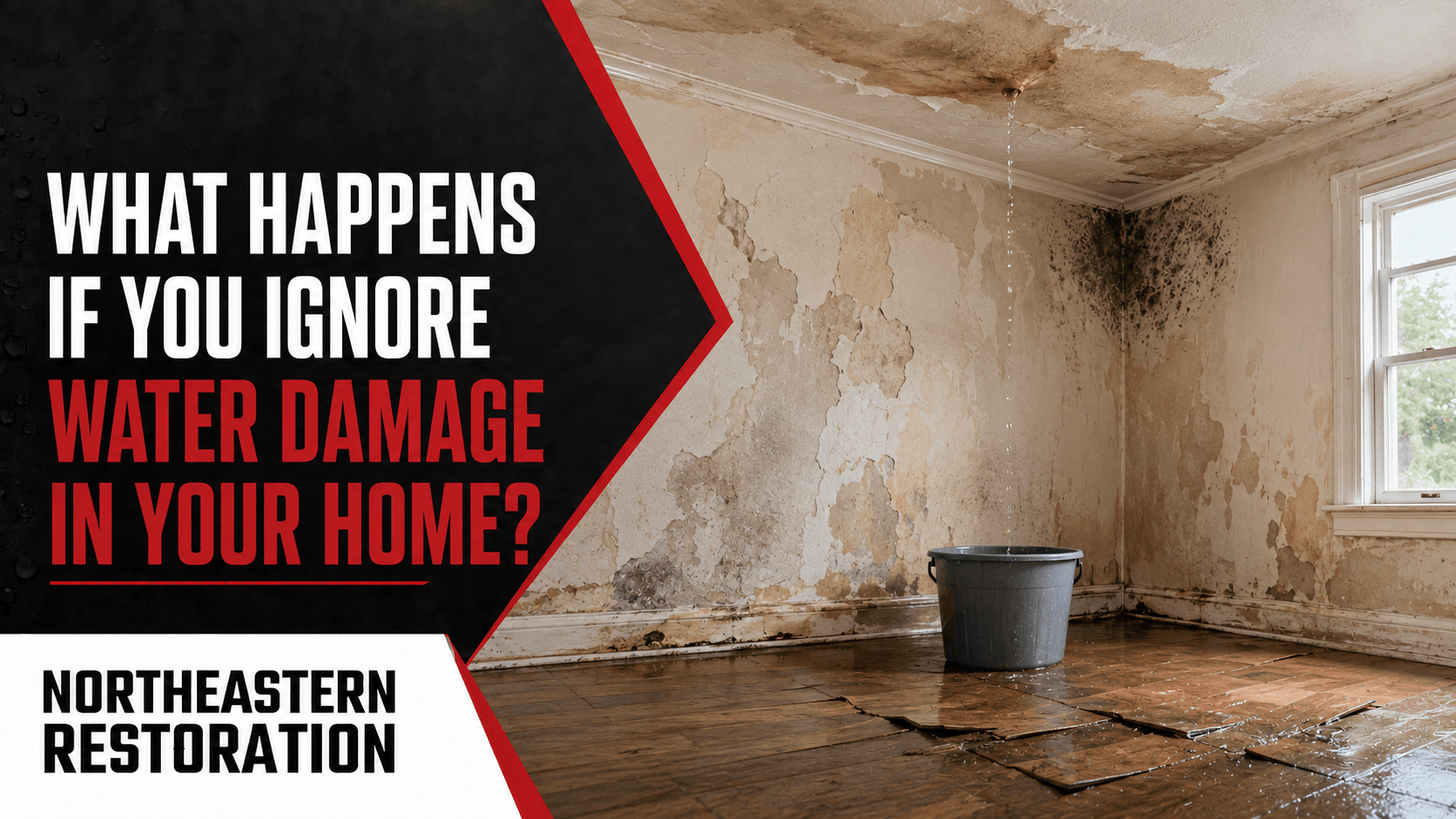
- New spots of discoloration on walls or ceilings: Brown, black, gray, or green discoloration appearing in the weeks after a water event is a strong visual indicator of mold growth. The visible spot is almost always the surface expression of a larger colony developing behind or beneath it.
- Worsening respiratory or allergy symptoms: Elevated mold spore counts cause respiratory irritation, persistent sneezing, eye irritation, and headaches that are worse inside the home and improve when you leave.
- Visible mold growth anywhere near the water event: Any visible mold after a water event should be treated as evidence of a potentially larger hidden colony. Surface cleanup without professional moisture mapping almost always leaves the root structure intact.
- Indoor relative humidity consistently above 60 percent: A hygrometer reading persistently above 60% RH after a water event indicates moisture levels high enough to sustain mold growth. Combined with any other sign on this list, immediate professional assessment is warranted.
How to Prevent Mold After Water Damage in Athens, GA
Preventing mold after a water event means eliminating moisture from building materials before the 24 to 48 hour colonization window closes. These steps describe what that prevention looks like in practice:
- Call a restoration company immediately. Professional extraction and structural drying started within the first few hours is the single most effective mold prevention measure available. Do not wait to see whether the area dries on its own.
- Remove standing water without delay. Every hour standing water remains in contact with materials extends saturation depth and reduces the likelihood of drying within the critical window.
- Remove saturated porous materials. Carpet padding, saturated insulation, and soaked drywall sections should be removed promptly. They cannot be dried in place fast enough to prevent mold colonization.
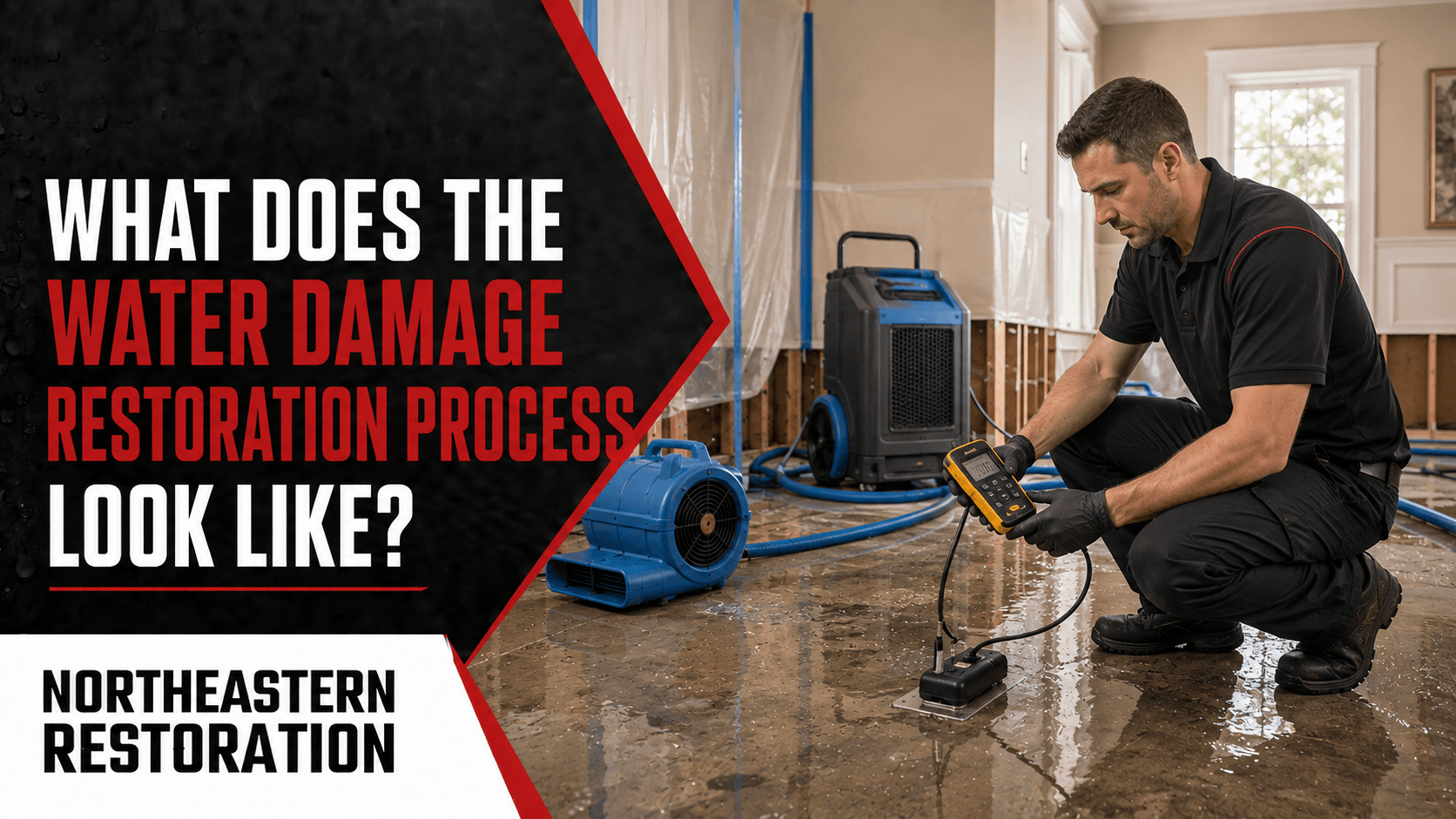
- Use commercial drying equipment — not household fans. Commercial air movers and dehumidifiers achieve the moisture removal rates required to dry structural materials within the prevention window. Household fans move air but cannot remove moisture from structural assemblies at a sufficient rate.
- Monitor with calibrated moisture meters. Do not declare drying complete based on surface feel or visual inspection. Calibrated meters are the only reliable confirmation that structural materials have reached the dry standard required to prevent mold.
Frequently Asked Questions About Water Damage and Mold in Athens, GA
What type of mold most commonly grows after water damage in Georgia?
Cladosporium, Penicillium, and Aspergillus are the most frequently identified species after water damage events in Georgia homes. Stachybotrys chartarum (black mold) grows more slowly and is more common in long-undetected leak situations than in acute water events.
Can mold grow in a home with central air conditioning running?
Yes. Air conditioning reduces but does not eliminate humidity, and AC systems themselves can become mold sources if condensate drain lines block or evaporator coils stay wet. In Athens, GA, even a well-cooled home can develop mold quickly after water introduces moisture into wall cavities where the AC cannot reach.
Does bleach kill mold effectively on drywall and wood?
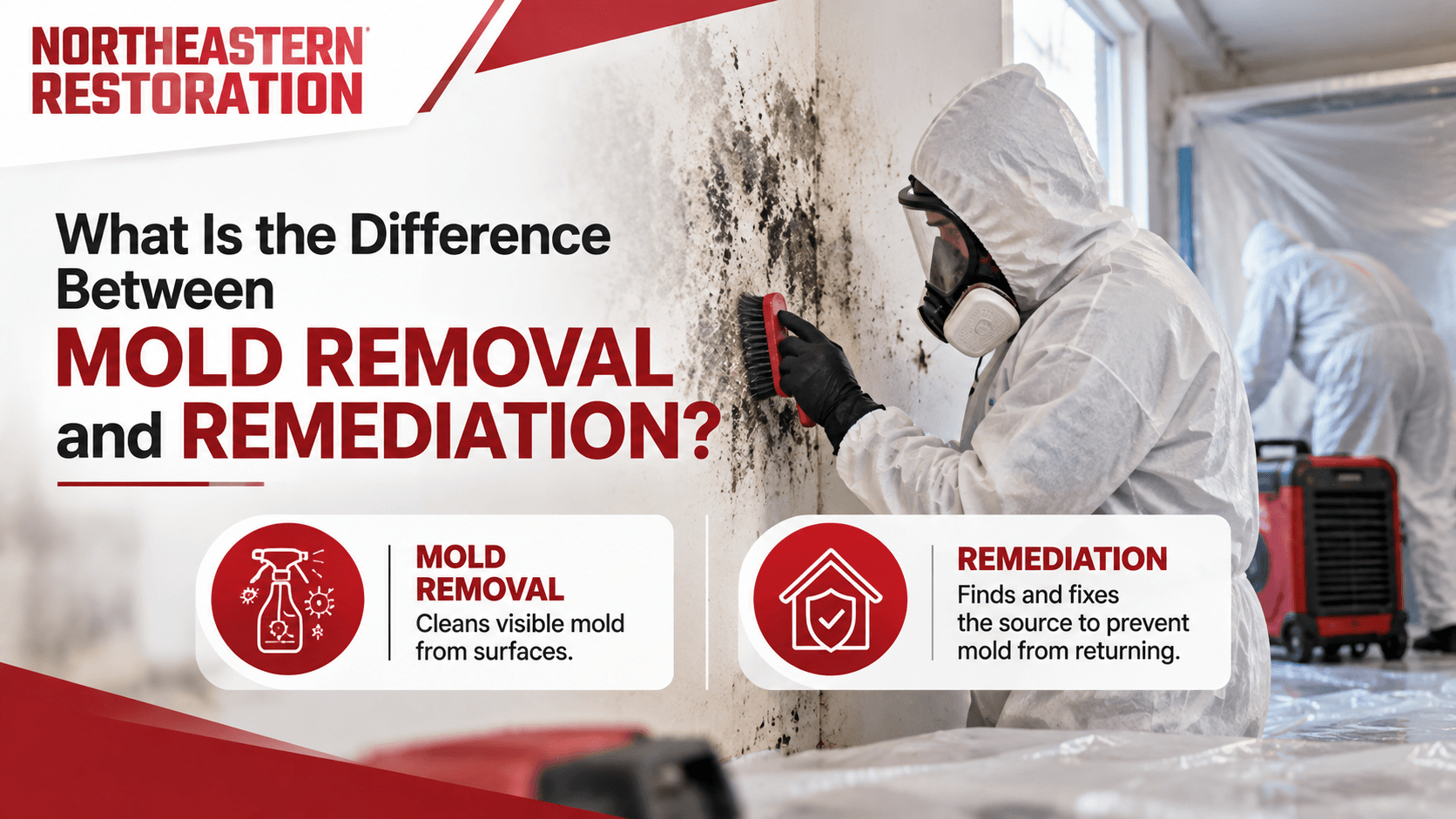
No — not on porous materials. Bleach kills surface mold but does not penetrate deeply enough to reach the root structure in drywall or wood. The surface appears clean, but the mycelium remains intact and regenerates a visible colony when moisture conditions return.
How do I know if the mold in my home is toxic?
Visual identification is not reliable for determining mold toxicity. Laboratory testing of a physical sample or a professional air quality test that identifies species and quantifies spore counts is the only accurate assessment. Any significant mold presence warrants professional evaluation regardless of appearance.
Is mold from water damage covered by homeowners insurance?
When mold developed directly from a covered water event — such as a sudden pipe burst — remediation is generally included in the covered restoration scope. When mold is attributed to long-term moisture accumulation or delayed response, most standard policies will not cover the remediation cost.
In Athens, GA, Water Damage and Mold Move Together — Act Accordingly
Athens's warm temperatures and high ambient humidity mean water damage and mold rarely stay separate for long. The window between a water event and the onset of mold colonization is measured in hours — professional drying started immediately is the most reliable way to keep them from becoming a compounded, far more expensive problem.
Northeastern Restoration provides 24/7 emergency water damage response and mold remediation throughout Athens, Georgia and surrounding counties. If you have had a water event and want to confirm mold has not begun developing, call us at
(678) 235-9436 for a free moisture assessment.